Cloud Security Fundamentals
The mental models that prevent the majority of real cloud breaches.
Who Secures What
Shared responsibility
The provider secures the cloud (hardware, virtualisation, and the physical data centres). You secure what you put in it — data, identity, configuration, and the OS on your VMs.
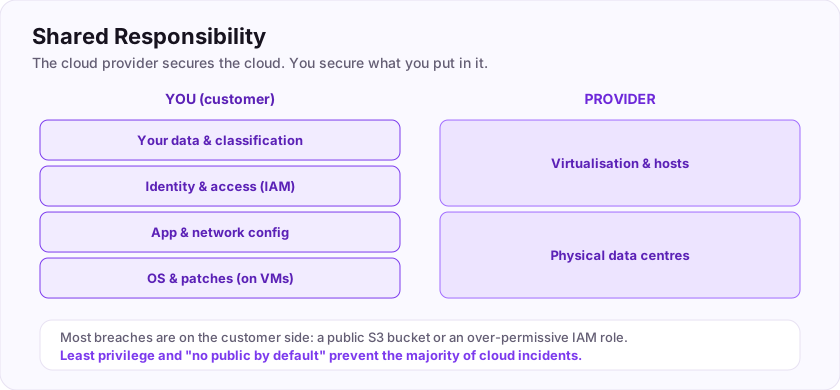
Most breaches are customer-side: a public bucket or an over-permissive role.
$ aws s3api get-bucket-acl --bucket my-bucket # is it public?Two habits prevent most incidents: least privilege and no public by default.
Flag: ASEC{no_public_by_default}
In the shared responsibility model, who secures the physical data centre?
+10 ptsNeed a hint?
Not the customer.What is the flag for this task?
+10 ptsNeed a hint?
Read the last line.IAM Is the New Perimeter
Identity runs everything
There is no network edge to hide behind in the cloud — identity decides what can talk to what. Scoped roles, short-lived credentials, MFA, and no long-lived keys in code remove most attack paths.
$ aws sts get-caller-identity # who am I / which role am I using?A leaked access key with broad permissions is one of the most common ways cloud accounts fall.
What has become the real security perimeter in the cloud? (one word)
+10 ptsNeed a hint?
Think IAM.Job-Ready Notes
Job-Ready Notes
Tools to know: ScoutSuite, Prowler, Pacu, the aws CLI, kube-bench.
Cheat sheet
aws sts get-caller-identity      # who am I / which role?
prowler aws                      # audit an AWS account
Interview practice
- Explain the shared responsibility model.
- Why is identity (IAM) called the new perimeter?
- Describe the SSRF-to-cloud-metadata attack.
Reviews
No written reviews yet. Be the first once you have played the room.